
Last updated: July 5, 2026
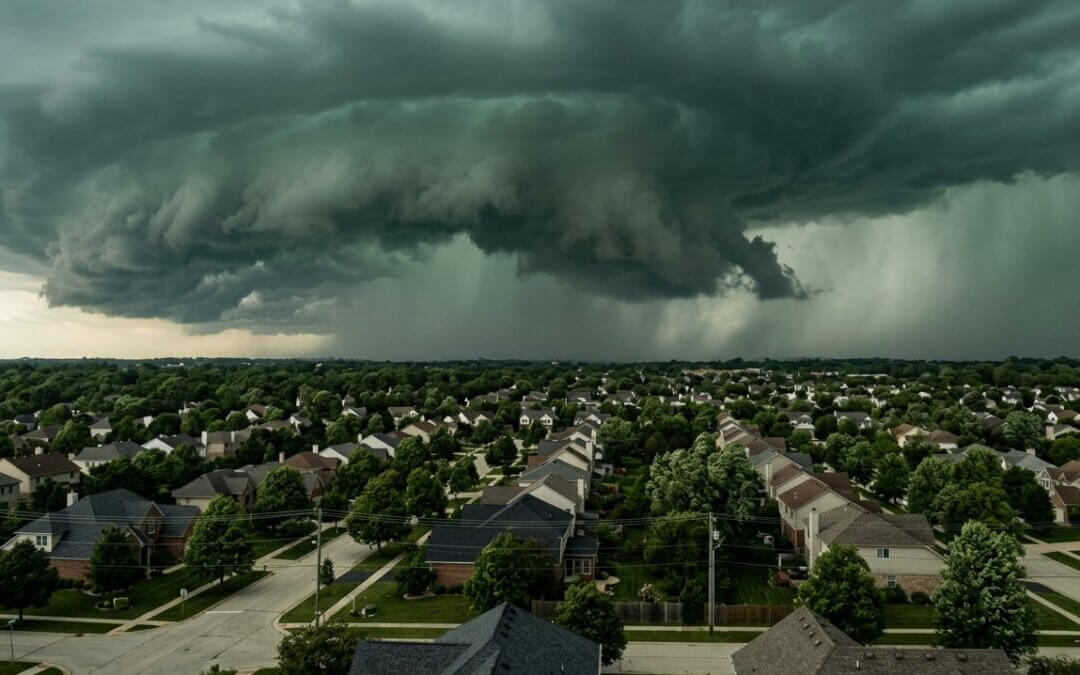
Give it seventy-two hours after the next serious hailstorm and the Fox Valley will grow a new crop of yard signs. Pickup trucks with out-of-state plates working the cul-de-sacs of Aurora and Oswego, clipboards on doorsteps, promises of a free roof. Storm chasers are the single biggest reason storm damage roof work has a reputation problem — because for them, the storm is the product and your insurance policy is the checkout line.
The process itself is neither mysterious nor rigged. Documented damage, a qualified local inspection, a claim, an adjuster meeting, an agreed scope, a build. We’ve worked hail, wind, and storm claims alongside homeowners’ insurance companies since 1999, and the pattern never changes: the claims that go smoothly are the ones where the homeowner slowed down at the start. Here is the whole process in order — and the red flags that should end a driveway conversation on the spot.
Table of Contents
- Why the claims process has a bad reputation
- Step one: document before anyone climbs a ladder
- Step two: get a local inspection before you file
- Filing the claim and the adjuster meeting
- Scope agreement, supplements, and the build
- Storm-chaser red flags, in order of severity
- FAQ
Why the claims process has a bad reputation
Because part of the industry is engineered to exploit it. Storm chasers follow weather systems across state lines, generate claims in volume, build fast with whatever labor is available, and are gone before the first freeze tests the workmanship. The homeowner keeps what they leave behind: the roof, the claim history, and a warranty nobody will ever answer for.
The model works because a hailstorm manufactures urgency — a stranger at the door, a ladder already off the truck, a pitch that the damage is fresh and the window is closing. But your name is on the claim, your premium absorbs the history, and that “warranty” is worth exactly the odds the company still answers its phone next year. A storm is the worst possible time to skip the vetting you’d do in any calmer month; our guide to finding a reliable local roofer applies double when the trucks are circling.
Step one: document before anyone climbs a ladder
Before any contractor touches your roof, document the event from the ground: the date of the storm, photos of hail on the lawn or deck rail, dents in downspouts and grills and mailboxes, shredded window screens, granules or shingle pieces in the yard. Time-stamped ground photos anchor everything that follows.
Hail size matters more than homeowners realize. As a rule of thumb, stones around quarter size and up are where shingle damage starts becoming plausible — NOAA’s severe-weather lab keeps a plain-English primer on hail worth two minutes of your time — though smaller hail can still bruise older, brittle shingles. The date matters because your policy language cares about when the damage happened and when you reported it. And stay off the roof yourself: steep, granule-strewn shingles after a storm are exactly how homeowners get hurt chasing evidence a professional can gather safely.
Step two: get a local inspection before you file
Call an established local contractor for an inspection before you file — because the worst outcome isn’t a denied claim, it’s a filed claim for damage that doesn’t exist, sitting in your history for nothing. A trained inspection answers the only question that matters first: is there actually a claim on this roof?
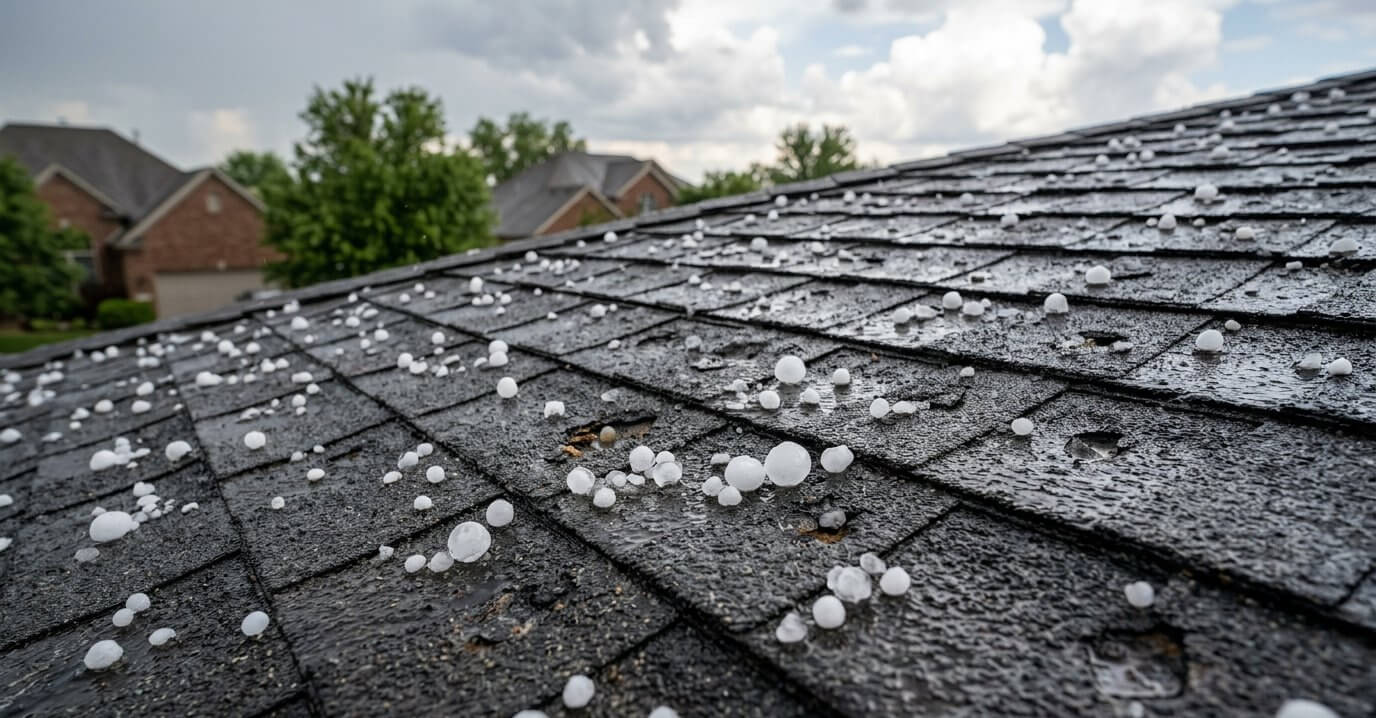
Storm damage is subtler than the door-knockers suggest. Fresh hail bruises and displaced granules read very differently from blistering and ordinary age — we’ve published a field guide on how to find hail damage on your roof — and wind damage has its own signatures, from creased tabs to lifted ridge caps. Our project managers are trained specifically to recognize hail damage and wind damage, and the inspection is free. If the damage is real, you walk away with a photo file that supports the claim. If it isn’t, you just avoided putting an empty claim on your record. Either way, the arrangement is the point: we work for the homeowner, not the insurance company.
Filing the claim and the adjuster meeting
You file the claim — not the contractor. Call your carrier or use its app, report the storm date, share your documentation, and get a claim number. The insurer assigns an adjuster to inspect the roof. The single best move you can make after that: have your contractor present at the adjuster meeting.
That meeting is where scope gets decided — repair or full replacement, which slopes, what components ride along — and a technical conversation between two people who both read roofs for a living beats an adjuster walking your shingles alone. The Insurance Information Institute’s guide to filing a homeowners claim is a solid neutral overview of your side of the paperwork; your specific duties — prompt notice, preventing further damage, keeping receipts for any emergency work — live in your policy, and they’re worth reading before you need them.
Scope agreement, supplements, and the build
After the adjuster’s visit, the insurer issues a scope: what it agrees is damaged and what it will pay to fix. The contractor’s job then flips to reconciliation — comparing that scope line by line against the roof’s real conditions and documenting anything missed, a routine process called supplementing.
Supplements aren’t a fight; they’re paperwork with photographs. Adjusters work fast and miss things, and a documented gap between scope and roof gets resolved between the contractor and the carrier while you go about your life. Once scope is agreed, the job proceeds like any other roof replacement: materials, schedule, build, cleanup, walkthrough. Two things worth knowing before then. A claim never obligates you to the insurer’s “preferred” vendor — the choice of contractor is yours. And partial damage sometimes reopens the repair-or-replace question on its own merits, which has a logic worth understanding: see how the repair-versus-replacement call should actually be made, and for the longer arc, how long a roof really lasts in Illinois.
Storm-chaser red flags, in order of severity
Any one of these should end the conversation in the driveway:
- They knocked on your door within days of the storm. Established local companies are buried in inbound calls after a hail event. They don’t need to canvass, so mostly they don’t.
- They offer to “waive” or “eat” your deductible. Paying, rebating, or hiding an insurance deductible is insurance fraud in Illinois — and the homeowner who signs the paperwork is a participant, not a bystander.
- They push a contingency agreement or assignment of benefits on the spot. An AOB puts a stranger between you and your own claim. No legitimate reason exists to sign one eleven minutes after meeting someone.
- The pitch opens with “you’re getting a free roof.” Anyone who announces the outcome before inspecting anything is selling the claim, not assessing the roof.
- No local address, no license number you can verify. An established contractor has years of nearby work you can drive past and a license you can look up.
- Pressure to file before any inspection. A claim isn’t a lottery ticket. It’s a permanent record attached to your home, and it should follow evidence, not precede it.
The FTC’s home-improvement scam guide reads like a biography of the storm-chase business model. It’s short, and it’s worth sending to any neighbor with a clipboard on their porch.
FAQ
Should I file an insurance claim for roof hail damage?
Only after a qualified inspection confirms there’s claimable damage. Claims sit in your history whether they’re paid or not, so filing on a door-knocker’s say-so is all downside. If a trained inspector documents genuine hail or wind damage with photos, file with confidence — that documentation is exactly what the adjuster process is built to evaluate.
Do I have to use the contractor my insurance company recommends?
No. In Illinois, the choice of contractor is yours. Insurer “preferred vendor” networks exist to manage the carrier’s costs and logistics, which is a fine goal that isn’t your goal. You want the contractor whose obligation runs to you — who will document what the scope missed rather than build only what it lists.
Is it legal for a roofer to pay or waive my insurance deductible in Illinois?
No. Illinois law prohibits contractors from paying, rebating, or otherwise hiding a homeowner’s insurance deductible, and arrangements dressed up as “discounts” or “advertising allowances” to cover it amount to insurance fraud. A contractor who opens with that offer is telling you how they handle paperwork when nobody’s watching. Walk away.
What happens at the roof adjuster meeting?
The insurance adjuster inspects the roof, documents damage, and forms the basis of the claim scope — what gets repaired or replaced and what gets paid. Your contractor should be on the roof at the same time, pointing out damage the adjuster’s pace might miss and speaking the same technical language. Scope disagreements are far easier to prevent up there than to appeal later.
Had hail? Get the inspection before the signature
The right order is boring on purpose: document, inspect, then decide — and never sign anything in a driveway. Schedule a free storm damage inspection with AAA Roofing. If there’s a claim on your roof, we’ll show you the evidence and stand next to you through the process. If there isn’t, that’s worth knowing before your name goes on one.
About the publisher
AAA Roofing Company is a family-owned, Illinois-licensed roofing contractor in Sugar Grove serving the Fox Valley and Chicagoland’s western suburbs since 1999. Learn more about the company or explore our residential roofing services.