Last updated: July 28, 2026
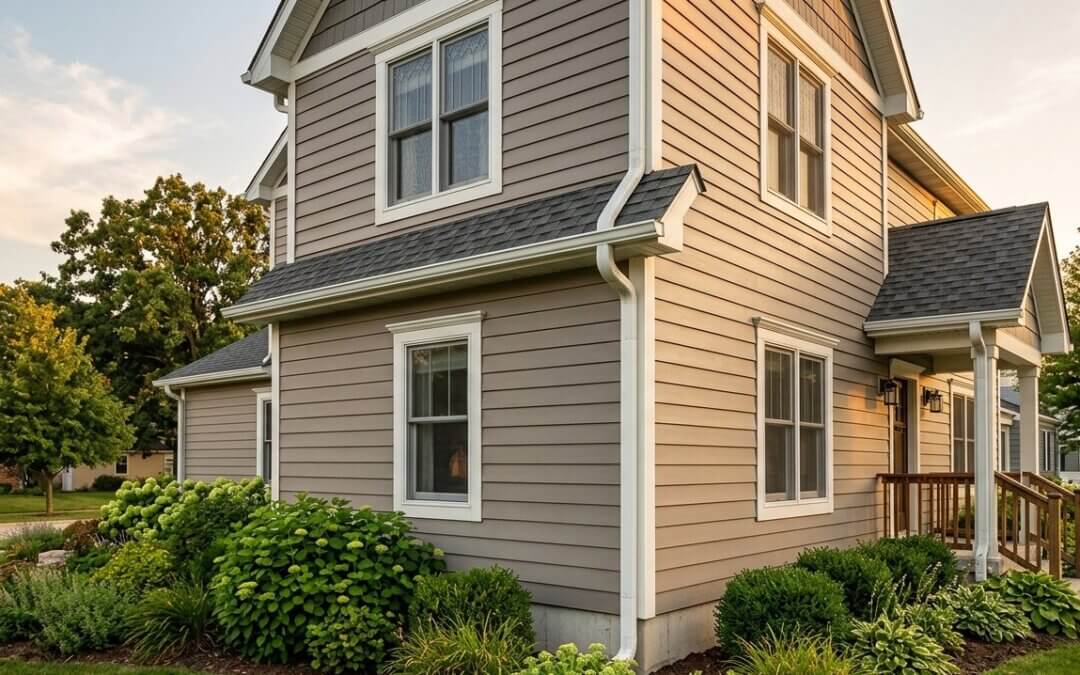
Siding gets chosen from a sample board in a showroom and then lives for thirty years on a wall that swings through a 120-degree temperature range every year. Northern Illinois is genuinely hard on exterior cladding: freeze-thaw cycling that runs into the dozens each winter, summer wall temperatures that make dark colors a materials question rather than a taste question, and a hail corridor that runs right through the Fox Valley. The two materials most homeowners actually choose between, vinyl and fiber cement, respond to all of that very differently. Here is how they compare on the things that matter after year ten, and why siding installation quality decides more of the outcome than the material selection does.
Table of Contents
- The short answer
- How each handles an Illinois winter
- Hail, wind, and impact
- Heat, color, and fade
- Side by side
- The installation details that decide the outcome
- Which house suits which material
- Frequently asked questions
The short answer
Fiber cement is the more durable material and vinyl is the more forgiving one, and for most Illinois homes the deciding factor is what you want out of the next twenty years rather than which product is better on a spec sheet.
Fiber cement holds up to impact, does not soften in heat, will not melt, and carries paint far longer than wood. It costs more to buy and considerably more to install, because it is heavy, it cuts slowly, and it demands precision that a fast crew will not deliver. Vinyl is lighter, faster, cheaper, needs no painting ever, and modern insulated products perform far better than the thin panels that gave the category its reputation in the 1980s. It is also more vulnerable to impact in cold weather and to heat distortion in specific situations.
Both are legitimate choices on an Illinois house. Neither survives a bad installation.
How each handles an Illinois winter
The winter question for siding is not cold, it is water plus cold. Water that gets into or behind cladding and then freezes expands, and expansion inside a material or an assembly is what breaks things. The two materials fail in opposite directions here.
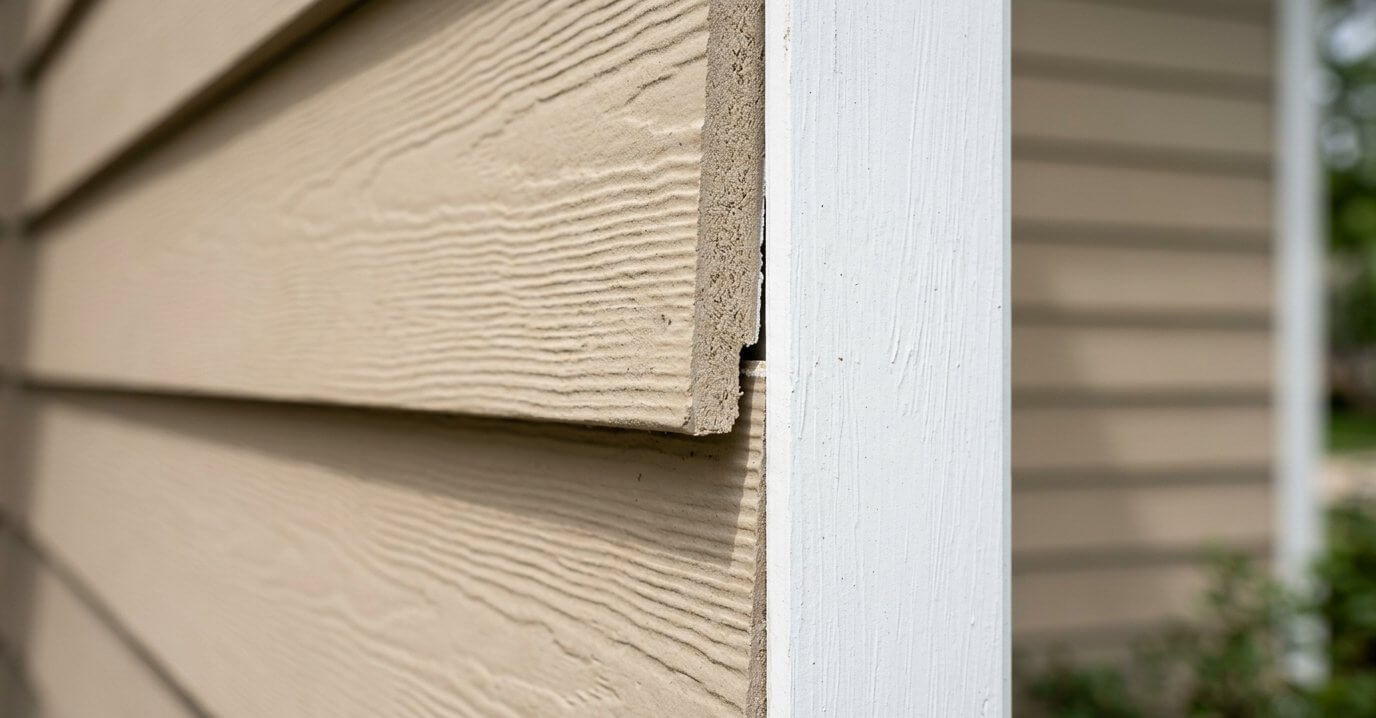
Fiber cement is a cementitious product, which means it can absorb water if its edges are left unsealed. Absorbed water in a freeze-thaw climate is the one thing that damages an otherwise near-indestructible material, and it shows up as edge swelling, delamination, and eventually crumbling along cut ends. The entire vulnerability is at field cuts, because factory edges arrive sealed. Every cut edge that goes up unprimed on a Fox Valley house is a countdown, and the failure appears at year eight rather than year one, which is why it rarely gets traced back to the install.
Vinyl does not absorb water at all, so freeze-thaw does nothing to the material itself. Its cold-weather vulnerability is brittleness: vinyl stiffens as temperature drops, and a panel that would shrug off a thrown ball in July can crack from the same impact in January. Thicker panels and better formulations reduce this substantially, and it is a real consideration on the lower courses of a wall facing a driveway or a yard where things get thrown.
The assembly matters more than either. Both materials are water-shedding claddings rather than waterproof barriers, and both depend on a properly detailed weather-resistive barrier and flashing behind them. Water gets behind siding on every house. Whether it drains back out or sits against the sheathing is a detailing question that the material choice does not touch.
Hail, wind, and impact
The Fox Valley sits in an active hail corridor, and this is where the two materials separate most clearly. Fiber cement is dense and hard, and it takes hail that dents metal and cracks vinyl without meaningful damage. Vinyl in a significant hail event can crack, puncture, or shatter, and cold weather makes it worse.
There is a practical wrinkle worth knowing: hail damage to vinyl siding is often on the elevation that faced the storm, which means a repair means matching panels that may be years out of production and several shades faded from their original color. Matching aged vinyl is genuinely difficult, and a partial replacement that does not match is a visible line on the house. Fiber cement is painted, so a damaged section is repaired and repainted to match the wall rather than sourced.
On wind, both materials perform to their tested ratings when installed correctly, and both fail when they are not. Vinyl relies on a locking hem and a nailing pattern that must leave the panel able to move; over-nailed vinyl fails in wind precisely because it cannot move. Fiber cement’s weight works in its favor but demands fastening into structure at the correct spacing.
If your siding is being replaced because of a storm, the claim process runs on the same rails as a roof claim, and the same rules apply. Our guide to storm damage insurance claims in Illinois covers how that process works, and the hail damage page covers what an adjuster is looking for.
Heat, color, and fade
Dark siding on a south or west wall in an Illinois July gets hot enough to matter. Vinyl has a heat distortion threshold, and dark colors on sun-exposed walls can approach it. Manufacturers addressed this with heat-reflective pigment technology in darker lines, and those products are genuinely better, but the physics has not gone away: a dark vinyl wall in full afternoon sun is working harder than a light one.
There is a specific and underappreciated failure worth mentioning, because it surprises homeowners. Low-E window glass on a neighboring house can reflect and concentrate sunlight onto a vinyl wall intensely enough to distort panels in a narrow band. It is uncommon, it is not a defect in the siding, and it is essentially unfixable except by blocking or diffusing the reflection. Fiber cement is immune to it.
On fade, vinyl color runs through the material, so it fades uniformly and gradually rather than peeling. Fiber cement is painted, and factory-applied finishes have gotten very good, but paint is a maintenance item on a long enough horizon. The tradeoff is that repainting is possible: a fiber cement house can change color in twenty years, and a vinyl house cannot without replacement.
Side by side
| Factor | Vinyl | Fiber cement |
|---|---|---|
| Relative material cost | Lower | Higher |
| Relative installed cost | Lower, faster install | Notably higher, slower and heavier |
| Hail and impact | Vulnerable, worse when cold | Strong |
| Freeze-thaw | Unaffected, does not absorb water | Vulnerable only at unsealed cut edges |
| Heat and dark colors | Distortion risk, mitigated by modern pigments | Unaffected |
| Painting | Never, color is integral | Repaintable, eventually a maintenance item |
| Repair | Panel swap, aged color hard to match | Section replace and repaint to match |
| Fire resistance | Combustible, will melt | Noncombustible |
| Weight on structure | Light | Heavy, fastening matters |
| Insulation option | Insulated backing widely available | Requires separate continuous insulation |
The installation details that decide the outcome
Both materials fail early for installation reasons far more often than material reasons, and the failures are specific enough to ask about directly.
Vinyl must be allowed to move. Vinyl expands and contracts measurably across a seasonal temperature swing, and a full-length panel changes length by enough to buckle if it is pinned. Correct installation means nailing in the center of the slot, leaving the fastener head slightly proud so the panel hangs rather than clamps, and leaving clearance at every J-channel and corner post. Buckled wavy vinyl on a hot afternoon is not a product defect. It is a panel that was nailed tight.
Fiber cement cut edges must be sealed. This is the single highest-value question to ask a siding crew in a freeze-thaw climate. Field-cut edges need priming or a manufacturer-approved sealant before installation. A crew that cuts and hangs without that step has built in a failure that will not appear for years. Manufacturers such as James Hardie and CertainTeed publish detailed installation requirements including cut-edge treatment, clearances to roofing and grade, and fastener specification, and following them is generally a condition of the product warranty.
Clearances are not optional on either. Siding needs specified gaps to roofing, decking, horizontal flashing, and grade. Siding run tight to a roof surface wicks water and traps debris, and it is one of the most common defects on otherwise competent installations. The roof-to-wall transition is where siding and roofing meet, and it is worth having the same contractor responsible for both sides of that detail.
Housewrap and flashing come first. Window and door head flashing, sill pans, and properly lapped weather-resistive barrier all live behind the siding and all get covered up on day two. If a bid does not mention them, ask. Water management behind the cladding is the part of the job you cannot inspect later.
Which house suits which material
Fiber cement makes sense when: you are staying in the house long-term, the elevation takes hard weather or has hail history, you want a specific architectural profile or the option to change color later, the house has a masonry or traditional character that suits a thicker shadow line, or fire resistance matters because of proximity to a neighboring structure.
Vinyl makes sense when: budget is a real constraint and the alternative is postponing the project, you want zero painting as a permanent condition, the house is a straightforward form where the install is clean, or you are pairing it with insulated backing to get a thermal improvement out of a siding replacement.
Two situations argue for doing it now rather than later regardless of material. First, if the siding is failing while the windows are also aging, doing them together means the window flashing gets integrated with the new weather barrier rather than worked around. Second, if the roof is within a few years of replacement, sequencing the two lets the roof-to-wall detail get built once, correctly, by one crew that owns the whole junction.
Frequently asked questions
Is fiber cement siding worth the extra cost over vinyl in Illinois?
It depends on how long you are staying and how exposed the house is. Fiber cement’s advantages are real and specific: hail and impact resistance, immunity to heat distortion, noncombustibility, and the ability to be repainted decades later. Those matter most on a long-term home in a hail-prone location. On a shorter horizon, or where budget decides whether the project happens at all, modern insulated vinyl is a sound choice that performs well when installed correctly.
Does fiber cement siding crack in freeze-thaw weather?
Properly installed fiber cement handles Illinois freeze-thaw very well. Its one vulnerability is water absorption at unsealed field-cut edges, which in a freezing climate leads to edge swelling and eventual deterioration. Factory edges are sealed; edges cut on site must be primed or sealed before installation per the manufacturer’s instructions. Asking a crew directly how they treat cut edges is the most useful question you can ask about fiber cement.
Can hail damage vinyl siding?
Yes. Vinyl can crack, puncture, or shatter under significant hail, and it becomes more brittle in cold weather, so a winter or early spring storm does more damage than the same hail in summer. Repairs are complicated by color matching, since aged vinyl has faded from its original shade and older product lines may be discontinued. Fiber cement resists hail substantially better and is repaired by replacing a section and repainting to match.
Why is my vinyl siding wavy?
Almost always because it was nailed too tightly. Vinyl expands and contracts significantly with temperature, and it is designed to hang from fasteners driven in the center of the nailing slot with the head left slightly proud so the panel can slide. Nailed tight, or nailed at the end of the slot, the panel has nowhere to go when it expands and buckles on hot days. It is an installation defect rather than a material one, and it usually shows up in the first summer.
Should I replace siding and roofing at the same time?
If both are near end of life, doing them together has a real advantage: the roof-to-wall transition, step flashing, and kickout flashing all get built as one continuous detail by one crew rather than being interpreted twice. That junction is a common leak point, and splitting responsibility across two contractors and two years is how it gets missed. It also means one mobilization, one staging area, and one cleanup.
Get both materials priced on your actual house
The right answer depends on your elevations, your exposure, how long you are staying, and what the wall behind the siding looks like once the first course comes off. AAA Roofing has been installing siding, windows, gutters, and roofing across the Fox Valley since 1999, which means the transitions between them are one crew’s responsibility. Request a free inspection and written estimate and we will price the options against the house rather than against a sample board.
About the publisher
AAA Roofing Company is a family-owned exterior contractor serving the Fox Valley and the western suburbs of Chicago since 1999, rated 4.9 stars across more than 119 Google reviews with an A+ rating from the Better Business Bureau. AAA Roofing Company, Inc., Illinois Roofing Contractor License #104.015004. Roofing, siding, windows, and gutters. See our services or browse the gallery.