
Last updated: August 18, 2026
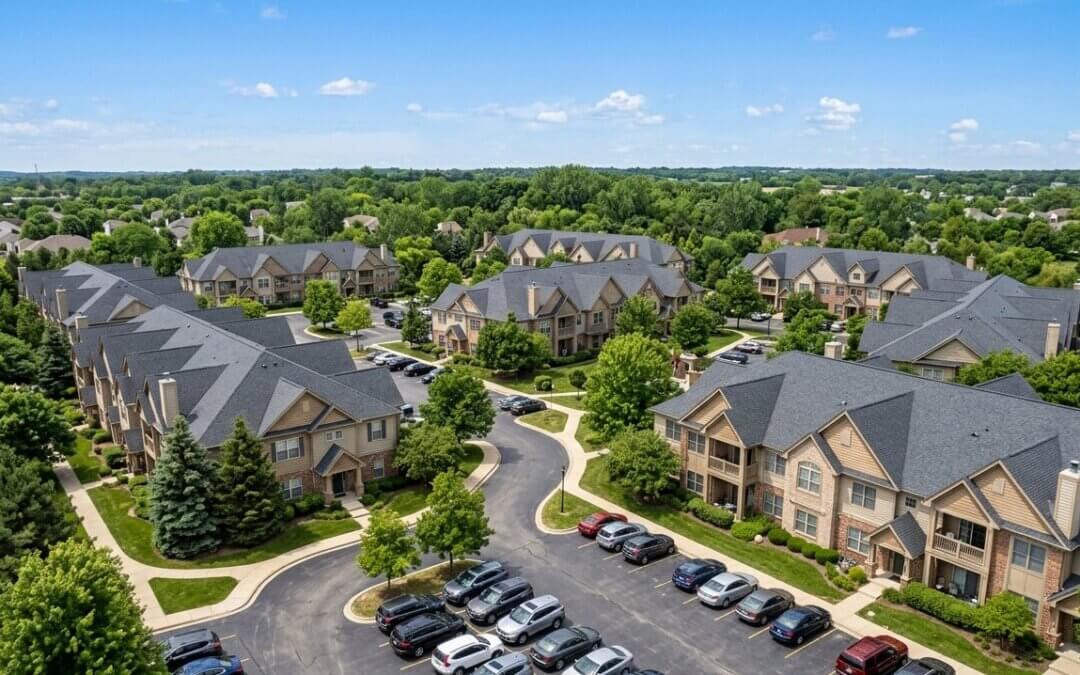
Re-roofing an occupied apartment building, condo association, or commercial property is a different job from replacing the roof on a single-family home, and the difference is not just size. It is coordination. You are working over people who live or run their business under that roof, on a budget that answers to owners or a board, on a timeline that has to bend around tenants, weather, and access. A residential tear-off is a one-day disruption to one family. A multifamily or commercial re-roof is a project, and the property managers who come through it cleanly are the ones who planned for the parts that have nothing to do with shingles. This guide from AAA Roofing Company, Inc. (Illinois roofing contractor license #104.015004) walks through how to think about a re-roof when you are the one responsible for the building.
Table of Contents
- What makes multifamily and commercial different
- Know your roof type first
- Coating vs tear-off: the budget question
- Phasing work on an occupied building
- Minimizing tenant disruption
- Budgeting and capital planning
- Documentation the owners will ask for
- Frequently asked questions
What makes multifamily and commercial different
The core difference is that the building stays in use throughout. On a residential roof, the homeowner can absorb a day of noise and go about their life. On a multifamily or commercial property, you are managing dozens of households or an operating business, each with their own tolerance for noise, dust, blocked parking, and crews overhead. That reality shapes every decision on the project, from the sequence of the work to the hours crews are on site to how debris and materials are staged.
It also raises the stakes on getting it right the first time. A leak on a home affects one family. A leak into an occupied multifamily building can hit multiple units, common areas, and a commercial tenant’s inventory, turning a roofing issue into a liability and tenant-relations problem at once. That is why multifamily roofing and commercial roofing are handled as their own disciplines, with dedicated property manager services, rather than as a bigger version of a house.
Know your roof type first
Before any conversation about cost or timeline, you need to know what kind of roof you actually have, because it drives everything that follows. Broadly, properties fall into two camps, and many larger complexes have both.
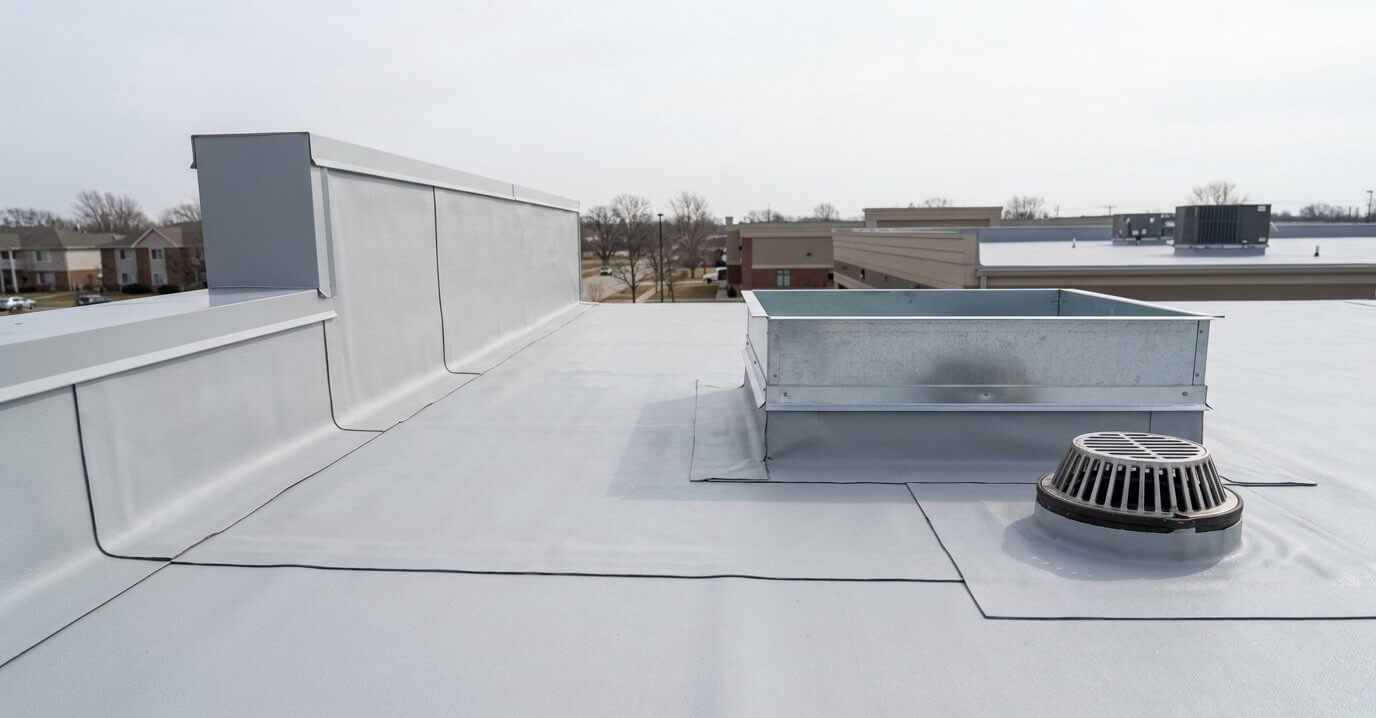
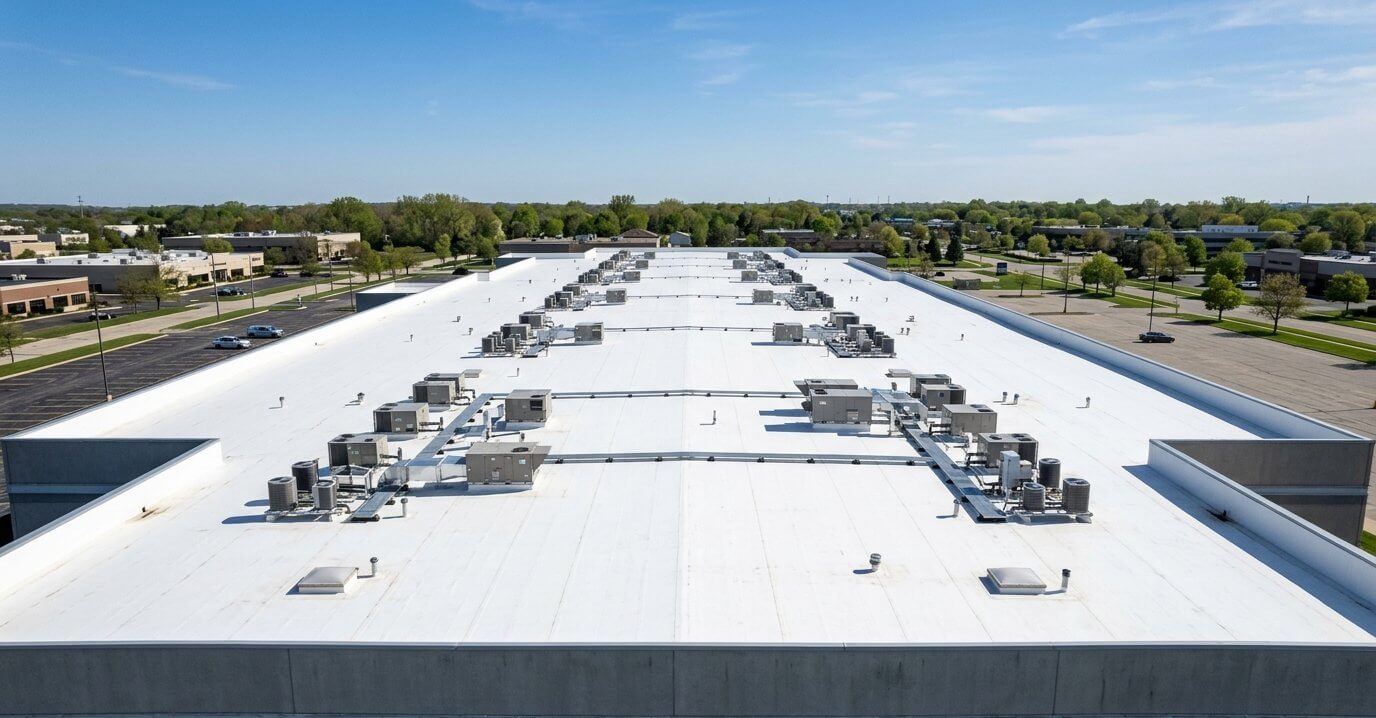
Low-slope or flat roofs are typical on commercial buildings and many multifamily structures. These use membrane or built-up systems rather than shingles, and they open up options a steep roof does not, including restoration coatings that can extend service life without a full tear-off. Steep-slope roofs on townhome-style multifamily and many residential-scale buildings use shingles and are re-roofed much like a house, just at scale and with the occupied-building coordination layered on top. Knowing which you have, and in what proportion across the property, is the starting point for a realistic plan. A proper assessment identifies the system, its remaining life, and whether you are looking at a repair, a restoration, or a full replacement, which is the same decision every building eventually faces, covered in our note on weighing a repair against a replacement.
Coating vs tear-off: the budget question
For low-slope commercial and multifamily roofs, the single biggest decision is often whether the roof is a candidate for a restoration coating or needs a full tear-off and replacement, because the two are very different in scope and disruption.
A roof coating, such as a silicone system applied over a sound existing membrane, can restore weatherproofing and extend the service life of a roof that is aging but not failed. When a roof qualifies, coating is far less disruptive than a tear-off: less noise, less debris, no exposed deck, and crews spend less time on the building. The catch is that coating is a restoration of a fundamentally sound roof, not a rescue for one that is already leaking through failed substrate or has trapped moisture in the system. A tear-off, by contrast, removes the old roof down to the deck and installs a new system, which is the right answer when the existing roof is at the end of its life or compromised underneath. Deciding between them is not a guess, it is what a real inspection determines, and we lay out the trade-offs in silicone coating versus tear-off. The wrong call in either direction is expensive, so this is the decision worth getting a professional assessment on before anything else.
Phasing work on an occupied building
Large re-roofs are rarely done all at once on an occupied property. They are phased, meaning the roof is divided into sections completed in sequence, each one made watertight before the next begins. Phasing serves several purposes at once. It keeps the building protected, since no large area is ever left open to weather overnight. It lets the work bend around tenant needs, access, and parking. And it can spread a large project across a manageable window rather than one overwhelming push.
The critical rule in any phased re-roof is that every section is returned to a watertight state at the end of each work period. A responsible crew does not open more roof than it can close before weather or the end of the day, which is the discipline that separates a smooth phased project from a middle-of-the-night leak into an occupied unit. For a property manager, understanding the phasing plan up front, which sections, in what order, over what timeline, is how you set tenant expectations and avoid surprises. This kind of planning is exactly what our process is built around.
Minimizing tenant disruption
Tenant disruption is the part of a re-roof that shows up in your inbox, so it is worth planning for as carefully as the roofing itself. The predictable friction points are noise, debris, parking and access, and communication.
- Noise is unavoidable during tear-off, but its timing is controllable. Confirm the hours crews will work and communicate them to tenants in advance so nobody is blindsided.
- Debris from a tear-off has to be contained and removed. A clean site with proper containment protects tenants, vehicles, and landscaping, and a magnetic sweep for nails at the end of each phase is standard on a well-run job.
- Parking and access often need to be temporarily rerouted around staging and dumpsters. Sorting this out before day one, and telling tenants where to park, prevents most of the complaints.
- Communication is the one that actually determines tenant satisfaction. Tenants tolerate a re-roof far better when they know it is coming, roughly how long it will take, and what to expect each week. A short notice ahead of the project does more for tenant relations than almost anything else.
Handled well, none of these is a crisis. Handled as an afterthought, any of them becomes a stack of complaints, which is why experienced multifamily crews treat tenant coordination as part of the job rather than the owner’s problem.
Budgeting and capital planning
A roof is one of the largest capital items on any property, and re-roofing rewards planning ahead rather than reacting to a failure. The property managers who handle it best are the ones tracking roof condition as an asset, with an assessment of remaining service life feeding into the capital plan, so a replacement is a scheduled, budgeted project rather than an emergency after a leak forces the issue.
That planning horizon is also where the coating-versus-replacement decision pays off, because a well-timed restoration coating on a qualifying roof can extend service life and push a full replacement further out, changing when the large expense lands. Knowing roughly how long your existing roof has, which our overview of how long a roof lasts in Illinois can help frame, lets you plan the spend instead of being surprised by it. We do not quote numbers here because a real budget comes only from an assessment of your specific building, its roof type, size, and condition. But the principle holds: a planned re-roof is almost always a smoother and better-managed project than an emergency one.
Documentation the owners will ask for
When you answer to owners, a board, or an association, the project is not finished when the last shingle is down. It is finished when you can show what was done. Good documentation protects you and the property, and it is worth confirming your contractor provides it: a written scope of work before the project, a clear record of the system and materials installed, photos of the completed work, and confirmation that the contractor is properly licensed and insured for a project of that scale.
On that last point, verify the license. In Illinois, roofing contractors are licensed by the state, and you can confirm any contractor’s license is current before signing. AAA Roofing Company, Inc. holds Illinois roofing contractor license #104.015004, and for a multifamily or commercial project you should expect that verification as a matter of course. It is a reasonable thing for a board or owner to ask you for, and a reasonable thing to have on file.
Frequently asked questions
How is commercial or multifamily re-roofing different from residential?
The main difference is that the building stays occupied and in use throughout, so the project has to be coordinated around tenants, access, parking, and a budget that answers to owners or a board. Commercial and larger multifamily buildings also often have low-slope or flat roofs using membrane systems rather than shingles, which opens options like restoration coatings that a steep residential roof does not have. The work is typically phased across sections rather than done all at once, and tenant communication becomes as important as the roofing itself.
Should I coat my commercial roof or replace it?
It depends entirely on the condition of the existing roof, which an inspection determines. A restoration coating, such as a silicone system over a sound existing membrane, can restore weatherproofing and extend the service life of a low-slope roof that is aging but not failed, with far less disruption than a tear-off. A full tear-off and replacement is the right answer when the roof is at the end of its life, leaking through failed substrate, or holding trapped moisture. Coating a roof that actually needs replacement does not solve the underlying problem, so the decision should follow a professional assessment.
How is a re-roof done on an occupied building without leaks?
Through careful phasing. The roof is divided into sections completed in sequence, and every section is returned to a watertight state at the end of each work period. A responsible crew never opens more roof than it can close before the end of the day or incoming weather, so the building is never left exposed overnight. Understanding the phasing plan in advance, which sections in what order over what timeline, lets a property manager set tenant expectations and avoid surprises.
How can I reduce tenant complaints during a re-roof?
Communication ahead of the work does the most. Tenants tolerate a re-roof far better when they know it is coming, roughly how long it will take, and what to expect. Beyond that, confirm and share the hours crews will work so noise is not a surprise, ensure debris is contained and swept for nails, and reroute parking and access around staging in advance with clear notice to tenants. Handling those points proactively prevents the majority of complaints.
How do I verify a commercial roofing contractor in Illinois?
Illinois licenses roofing contractors at the state level, and you can confirm a contractor’s license is current before signing a contract. For a multifamily or commercial project, you should also confirm the contractor carries insurance appropriate to the scale of the work, and expect a written scope, a record of the system and materials installed, and photos of the completed work. AAA Roofing Company, Inc. holds Illinois roofing contractor license #104.015004. Asking for and filing that verification is standard practice for a project you answer to owners or a board for.
Planning a re-roof on a property you manage?
Multifamily and commercial re-roofing is as much a coordination and planning job as a roofing one, and it goes best with a contractor who treats it that way. AAA Roofing Company, Inc. (Illinois roofing contractor license #104.015004) provides multifamily and commercial roofing with property manager services built around occupied buildings. Request an assessment and we will start with your building, your roof type, and your timeline.
About the publisher
AAA Roofing Company, Inc. is a licensed Illinois roofing contractor (license #104.015004) serving the Fox Valley and surrounding communities. Residential, multifamily, and commercial roofing, roof coatings, and property manager services. See commercial roofing, multifamily roofing, and property manager services.