Last updated: August 18, 2026
Asphalt shingles cover the vast majority of homes in the Fox Valley, and for good reason: they balance cost, durability, and looks better than anything else for a typical Illinois house. But “asphalt shingle” covers a wide range, from the flat, basic strips of a generation ago to the dimensional, wind-rated, algae-resistant products on new roofs today, and the choice you make affects how your roof looks and how it holds up through Illinois winters, wind, and summer storms. This guide from AAA Roofing Company, Inc. (Illinois roofing contractor license #104.015004) walks through how to choose shingles for a home in this climate, what actually matters, and the one factor that matters more than the shingle you pick.
Table of Contents
- Architectural vs 3-tab shingles
- What Illinois weather demands
- Wind resistance
- Algae resistance and those black streaks
- Color and curb appeal
- The manufacturer we install
- Why installation beats the shingle
- Frequently asked questions
Architectural vs 3-tab shingles
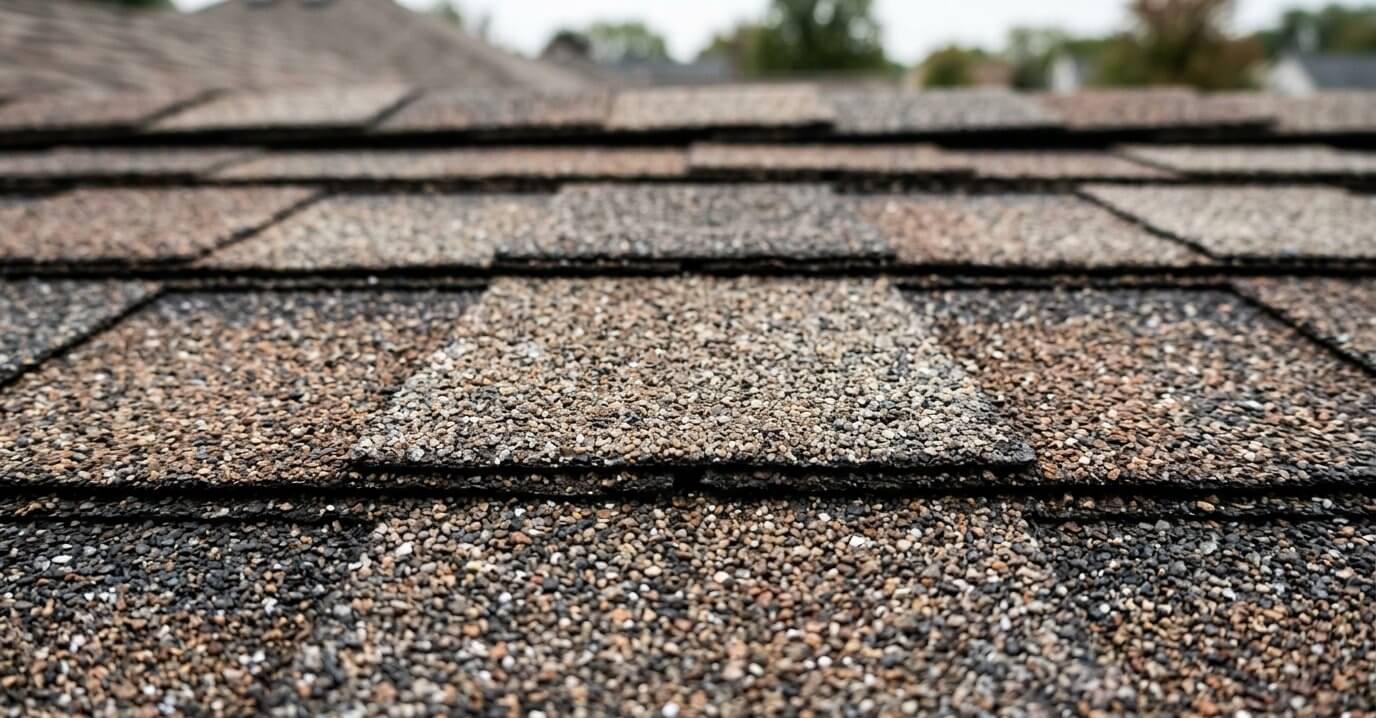
The first choice is the type of shingle, and for most homeowners today it comes down to two categories. The older style is the 3-tab shingle, a flat, single-layer shingle with a uniform look and cutouts that create the appearance of three tabs. It is the lightest and least expensive option, and for decades it was the default. The modern standard is the architectural shingle, also called dimensional or laminate, which is built from multiple layers bonded together to create depth, texture, and a heavier, more substantial roof.
Architectural shingles have become the standard on new roofs for good reasons beyond looks. The multi-layer construction is thicker and more durable, they generally carry higher wind ratings, and they give a home a richer, more dimensional appearance that a flat 3-tab cannot match. For a typical Fox Valley home getting a new roof, architectural shingles are what we recommend and install in nearly every case, and they are the foundation of our residential roofing work. The 3-tab still has its place on some budgets and applications, but if you are re-roofing a home you plan to keep, the architectural shingle is almost always the better long-term value.
What Illinois weather demands
Choosing a shingle for a Fox Valley home means choosing for a climate that swings hard in both directions. Summers bring heat, humidity, and thunderstorms with strong straight-line winds and the occasional hail. Winters bring cold, snow load, and the relentless freeze-thaw cycling that is hard on every part of a roof. A shingle that would be fine in a mild climate has to work harder here.
That points to a few properties worth prioritizing: solid wind resistance for the storms that roll through, durability to handle temperature swings and impacts, and algae resistance for the humid summers that streak Midwest roofs. It also means the roof system underneath the shingles matters as much as the shingles themselves. Proper attic ventilation, for example, regulates roof temperature and moisture and directly affects how long shingles last, which is why we treat it as part of the roof rather than an afterthought, as covered in our note on attic ventilation and roof problems. The right shingle on a poorly ventilated roof still underperforms.
Wind resistance
Wind is the storm force most likely to damage a shingle roof in this area, and shingles are rated for the wind speeds they are designed to withstand. Architectural shingles generally carry higher wind ratings than basic 3-tab products, which is one of the practical reasons they have become standard on new roofs here.
But a shingle’s wind rating is only as good as the installation behind it. Wind ratings assume the shingle was installed exactly to the manufacturer’s specification, with the correct number of nails placed in the correct location on each shingle, and proper sealing. A high-rated shingle nailed too high, too few times, or in the wrong spot does not deliver its rating, and improper nailing is one of the most common installation shortcuts that shows up later as wind-lifted or missing shingles. This is a theme you will see repeated below: the product sets the ceiling, and the installation determines whether you actually reach it.
Algae resistance and those black streaks
If you have seen roofs around the Fox Valley with dark streaks running down them, that is not dirt and it is not the shingle wearing out. It is algae, a common growth in humid climates that feeds on components in the shingle and leaves those characteristic black stains. It is primarily a cosmetic problem, but it makes a roof look old and neglected long before it actually is.
The fix is to choose algae-resistant shingles, which most quality architectural lines now offer. These shingles incorporate elements that inhibit algae growth and keep the roof looking clean for far longer in a humid Midwest summer. For a home where curb appeal matters, and it always matters for resale, algae resistance is an easy box to check when selecting a shingle, and it is standard on the products we install. It is a small specification that makes a visible difference a few years down the road.
Color and curb appeal
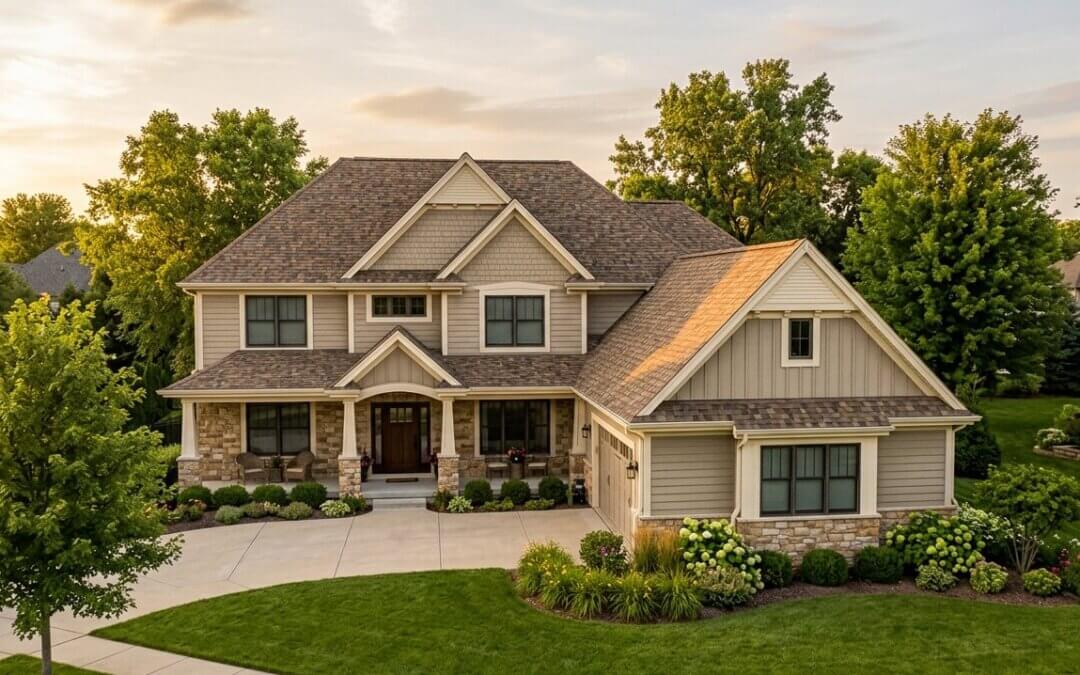
The roof is one of the largest visible surfaces on your home, so shingle color is a real design decision, not an afterthought. Architectural shingles come in a wide range of colors and blended tones designed to complement different siding and trim, and the right choice ties the whole exterior together while the wrong one fights it.
A few practical notes for choosing color in this area. Blended, dimensional colors tend to hide minor imperfections and read as more upscale than flat single tones. Darker roofs absorb more heat, which is a minor consideration in a mixed climate but worth a thought. And it is always worth looking at a sample against your actual siding, in daylight, rather than choosing from a tiny swatch, because roof colors read very differently at full scale on a whole house. Browsing completed roofs is one of the best ways to picture it, which is what our recent projects and gallery are for.
The manufacturer we install
There are several shingle manufacturers on the market, and the one AAA Roofing Company, Inc. installs is CertainTeed. CertainTeed is a long-established American building materials manufacturer whose architectural shingles, including their widely recognized Landmark line, are a proven choice for homes in this climate, combining the dimensional look, durability, wind performance, and algae resistance discussed above. You can read about their shingle products directly on the CertainTeed site.
Standardizing on one quality manufacturer is a deliberate choice on our part. It means our crews know the product’s installation requirements thoroughly, we stock and work with a consistent system rather than juggling whatever is cheapest that week, and the components of the roof are designed to work together. For a homeowner, the takeaway is less about the brand name on the shingle and more about choosing a contractor who installs a proven product correctly and consistently, every time, on every new roof.
Why installation beats the shingle
Here is the most important thing in this entire guide, and it is the point homeowners most often miss when they focus on comparing shingle products: the quality of the installation matters more than which quality shingle you choose. The best shingle on the market, installed poorly, will fail early. A solid shingle installed correctly will deliver its full service life.
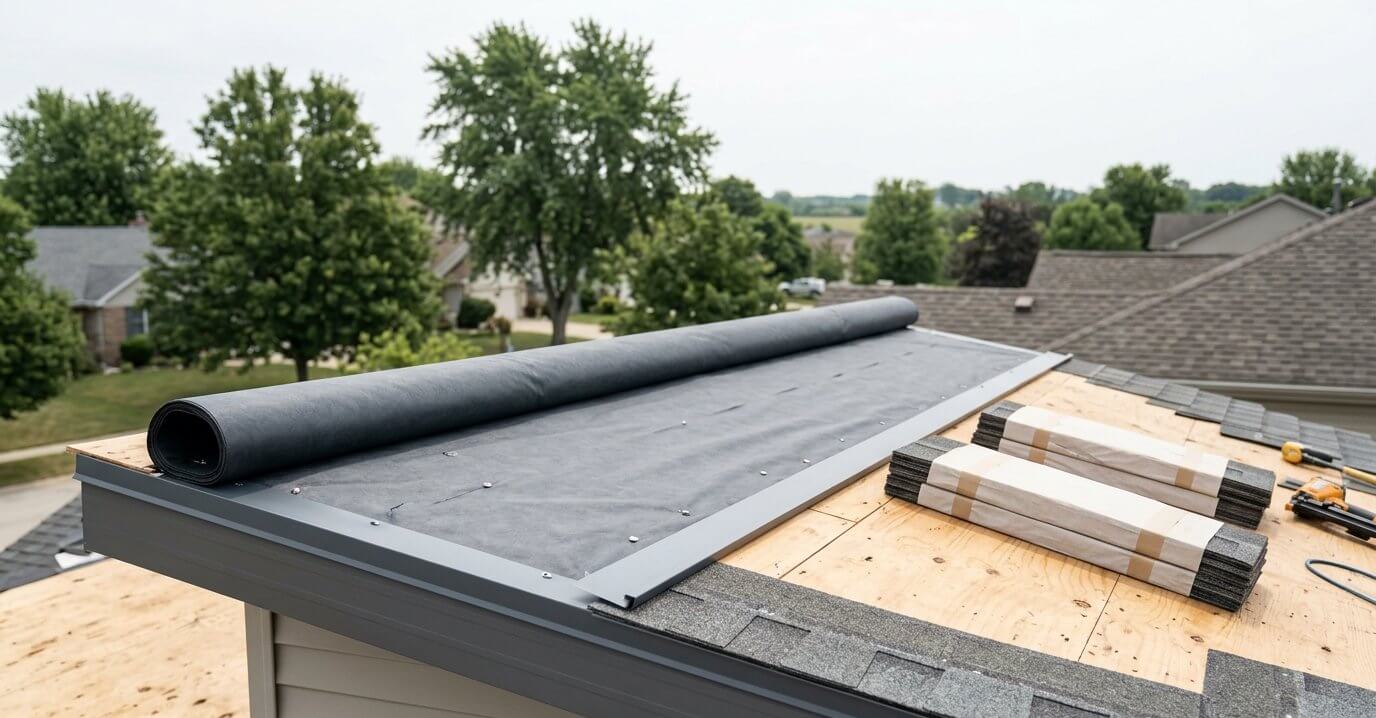
Roofs almost never fail because the shingle was not good enough. They fail at the details, and the details are all installation: nails placed wrong or driven too deep, flashing at chimneys, valleys, and wall intersections done carelessly, underlayment skipped or skimped, ventilation ignored, and penetrations sealed poorly. Every one of those is a workmanship issue, not a product issue, and every one of them is where leaks and premature failures actually start. This is why choosing the contractor is a bigger decision than choosing the shingle, and why it is worth confirming the contractor is properly licensed, insured, and experienced with the specific product they are installing. In Illinois, roofing contractors are licensed by the state, and you can verify a license before you sign. AAA Roofing Company, Inc. holds Illinois roofing contractor license #104.015004. The shingle sets the potential. The installation decides whether your roof ever reaches it, which is exactly what our process is built to deliver.
Frequently asked questions
What is the difference between architectural and 3-tab shingles?
3-tab shingles are flat, single-layer shingles with a uniform look, the lightest and least expensive option. Architectural shingles, also called dimensional or laminate, are built from multiple bonded layers that create depth and texture and a heavier, more durable roof. Architectural shingles generally carry higher wind ratings, last longer, and give a home a richer appearance, which is why they have become the standard on new roofs. For a home you plan to keep, architectural shingles are almost always the better long-term value.
What shingles are best for the Illinois climate?
The Fox Valley climate swings from hot, humid, stormy summers to cold winters with heavy freeze-thaw cycling, so the priorities are solid wind resistance, durability against temperature swings and impacts, and algae resistance for humid summers. Architectural shingles handle these conditions better than basic 3-tab products. Just as important, the roof system underneath, especially proper attic ventilation, affects how long any shingle lasts, so the whole roof matters, not just the shingle on top.
What causes black streaks on a roof?
Those dark streaks are algae, a common growth in humid climates that feeds on components in the shingle and leaves black stains running down the roof. It is mostly a cosmetic issue, but it makes a roof look old and neglected long before it actually is. The solution is to choose algae-resistant shingles, which most quality architectural lines now offer. They incorporate elements that inhibit algae growth and keep the roof looking clean far longer through Midwest summers.
Does the shingle brand matter more than the installer?
No. The quality of the installation matters more than which quality shingle you choose. Roofs rarely fail because the shingle was not good enough. They fail at the details, which are all installation: nailing, flashing at chimneys and valleys, underlayment, ventilation, and sealing penetrations. The best shingle installed poorly will fail early, while a solid shingle installed correctly delivers its full service life. Choosing an experienced, properly licensed contractor is a bigger decision than choosing the shingle itself.
How do I know a roofing contractor is qualified in Illinois?
Illinois licenses roofing contractors at the state level, and you can verify a contractor’s license is current before signing a contract. Beyond the license, confirm the contractor carries insurance and has experience installing the specific shingle product they propose, since correct installation of that product is what determines your roof’s performance. AAA Roofing Company, Inc. holds Illinois roofing contractor license #104.015004. Verifying licensing and insurance is a reasonable and standard step before any roofing project.
Choosing a new roof for your home?
The shingle is one decision, and the contractor who installs it is the bigger one. AAA Roofing Company, Inc. (Illinois roofing contractor license #104.015004) installs CertainTeed architectural shingles on homes across the Fox Valley, with the installation detail that decides whether a roof reaches its full life. Request an estimate and we will walk your roof and your options with you. Already an AAA customer? If we installed your roof, our 3-year workmanship warranty covers our work. Call the office at (630) 844-2553.
About the publisher
AAA Roofing Company, Inc. is a licensed Illinois roofing contractor (license #104.015004) serving the Fox Valley and surrounding communities. Residential, multifamily, and commercial roofing, new roofs, and roof coatings. See residential roofing, new roofs, or our process.